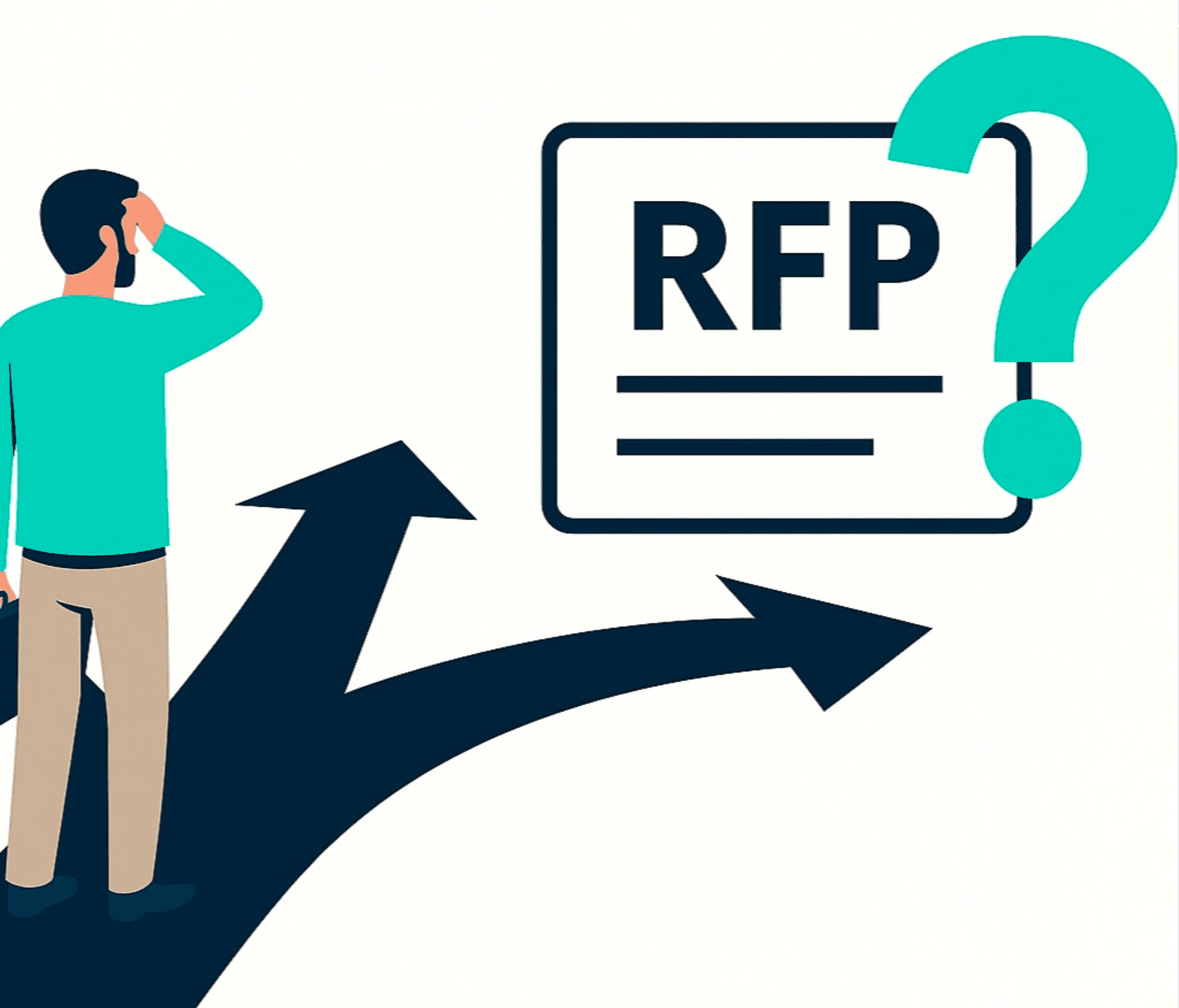
Someone recently asked me a simple question:
“Why is it so hard to find an RFP?”
They weren’t in government, had never read or submitted an RFP, and had no background in procurement. From their perspective, RFPs are public documents — so shouldn’t they be easy to search, easy to browse, and easy to access?
It’s a fair question.
For something as essential and high-impact as public sector contracting, you might expect the process of finding government RFPs to be simple, searchable, and consistent. But for most businesses, especially smaller consultancies and founder-led firms, discovering opportunities is often the most frustrating step in the entire RFP workflow.
This isn’t due to a lack of transparency. On the contrary, it’s the unintended consequences of a system marked by decentralization and by processes optimized for internal stakeholders rather than external users. Below are five structural reasons why finding an RFP remains surprisingly difficult.
1. Every Government Publishes RFPs in Its Own Unique Way
State and local government procurement is highly decentralized. Every city, county, and state operates under its own governance structure and has the authority to design its own procurement rules, approval workflows, and publication processes.
That means:
There is no established standard for how RFPs must be posted
No shared naming conventions
No common expectations for what must be visible up front
As a result, each jurisdiction designs its own approach, forcing businesses to become familiar with potentially different processes every time they cross a county or city line.
2. Procurement Portals and Websites Look and Feel Completely Different
The experience of discovering RFPs varies dramatically depending on the technology a government uses. Some agencies use modern procurement systems with clean navigation and searchable databases. Others rely on static webpages or legacy systems built a decade or more ago.
This inconsistency creates significant friction:
Navigation structures vary widely
Terminology like “Solicitations,” “Bids,” “Opportunities,” or “Business with Us” isn’t standardized
Some portals require logins; others don’t
The number of clicks required to reach an actual RFP can range from one to well over ten. For busy professionals, especially those scanning multiple jurisdictions, this inconsistency multiplies the effort required.
3. RFP Listings Often Provide Limited or Incomplete Information
Many jurisdictions post only the bare minimum on the public-facing page: a title, publication date, and due date. Everything else about the RFP’s scope, timeline, and budget is tucked away in one or more attachments.
This means businesses must:
Navigate multiple website pages
Dig through dozens of pages
Download large PDFs
All of this is required just to understand whether the opportunity is relevant. For small businesses, this initial filtering stage can consume hours per week.
4. Information Is Often Presented in Hard-to-Navigate Formats
Even when the right documents exist, the way the information is displayed can add unnecessary difficulty. Common issues include:
Complicated navigation schemas
Small pop-up document viewers
Tiny text sizes
These design patterns require close attention and interpretation to navigate. Businesses often describe the process as mentally draining, not because the content is complex, but because the presentation is.
5. There Are No Predictable Publishing Timelines
Most local jurisdictions release RFPs whenever internal budget cycles, staffing, or approvals allow. Few publish forward-looking calendars.
For businesses, this means:
Inability to plan a sustainable work pipeline
Wasted time checking multiple sites repeatedly
Lost billable hours
A single missed posting can reduce preparation time from weeks to days, making it harder to compete effectively.
The Bigger Picture: A System Built for Transparency, Not Usability
The difficulties businesses face are not the result of bad intent. State and local procurement is designed around rules, compliance, and documentation — not user experience or discoverability.
But if you’re on the outside looking in, like the person who asked me the question, none of that is obvious.
Understanding these structural challenges helps explain why so many businesses struggle to enter government contracting. It’s also why we built RFP Leads — to make discovery easier and far less time-consuming. One place, consistent formats, no guesswork.
You can explore it below.